

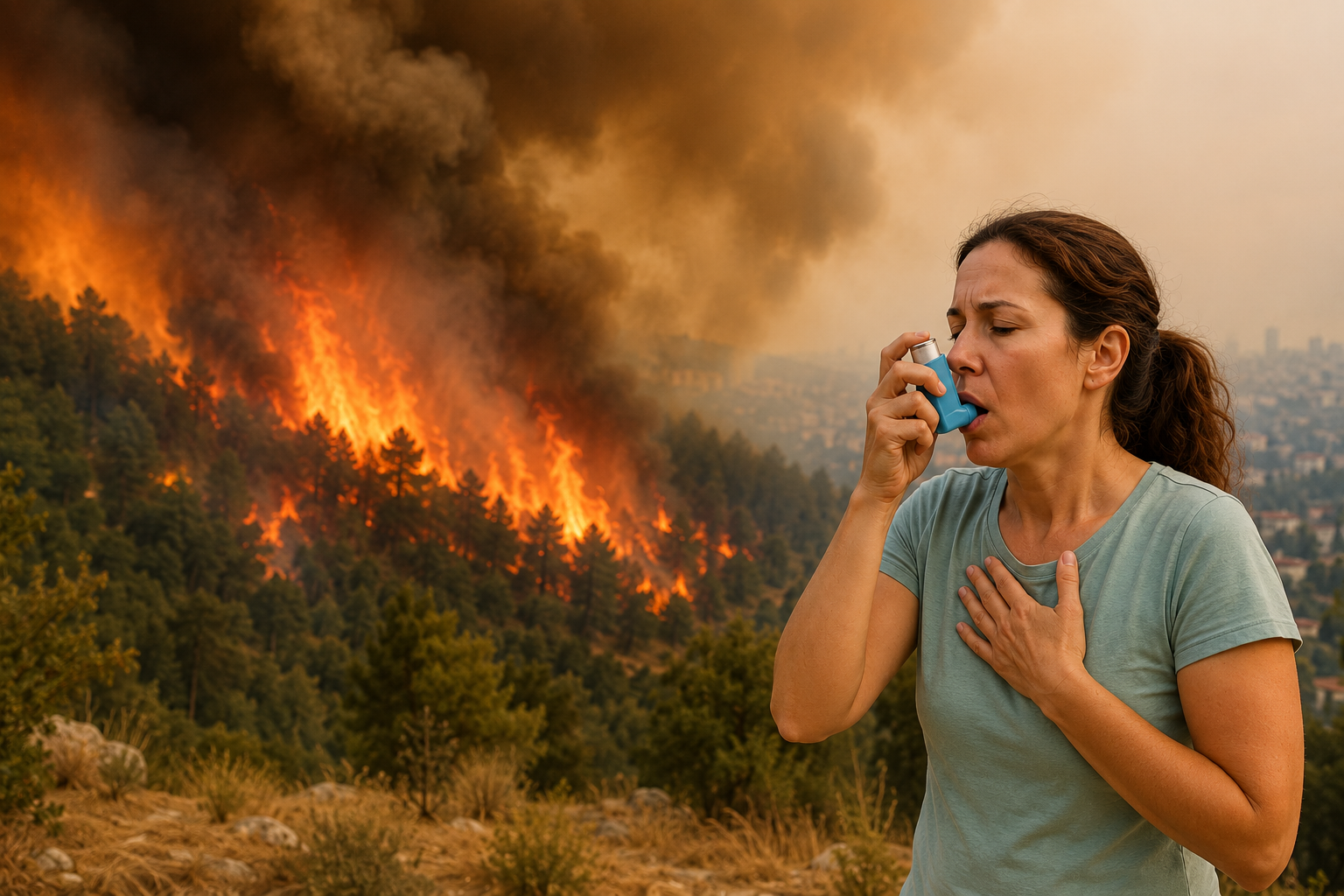
Wildfire smoke can aggravate chronic respiratory and cardiovascular diseases, with children, older adults, pregnant women, and people with underlying health conditions facing the highest risk, according to respiratory health experts.
Exposure to wildfire smoke can worsen asthma, chronic obstructive pulmonary disease (COPD), and cardiovascular conditions by carrying fine particulate matter and toxic gases deep into the lungs. Experts advise vulnerable groups to minimize outdoor exposure and seek medical attention if symptoms persist or worsen.
Wildfire smoke poses a significant public health risk beyond the immediate danger of flames, as airborne fine particles and toxic gases can trigger or worsen chronic illnesses, respiratory specialists say.
According to Prof. Dr. Sinem Güngör of Süreyyapaşa Chest Diseases and Thoracic Surgery Training and Research Hospital, smoke generated during forest fires contains harmful gases and particulate matter capable of reaching the deepest parts of the lungs. This exposure can irritate the airways, promote inflammation, and lead to both acute and long-term health problems.
Chronic conditions at greater risk
People living with asthma, chronic obstructive pulmonary disease (COPD), heart disease, or other chronic medical conditions are particularly vulnerable. Experts say wildfire smoke may trigger asthma attacks, worsen breathing difficulties, increase heart-related symptoms, and contribute to persistent respiratory complications. Older adults, children, pregnant women, and immunocompromised individuals are also considered high-risk groups.
Reducing smoke exposure
Health authorities recommend staying indoors when smoke levels are high, keeping windows and doors closed, and using air purifiers with particulate filters where available. If outdoor activity is unavoidable, properly fitted N95 or equivalent particulate-filtering respirators provide better protection than standard surgical or cloth masks against fine smoke particles.
Individuals experiencing persistent cough, shortness of breath, chest tightness, wheezing, palpitations, or worsening symptoms of an existing chronic disease after smoke exposure should seek medical evaluation without delay, experts advise.
Why It Matters
As climate change contributes to more frequent and intense wildfires, wildfire smoke is becoming an increasingly important public health concern. Protecting vulnerable populations and reducing smoke exposure can help prevent disease flare-ups, emergency hospital visits, and long-term health complications associated with poor air quality.
Sources:Anadolu Agency, Turkish Thoracic Society
Compiled by: MedTurkiye360com GPT