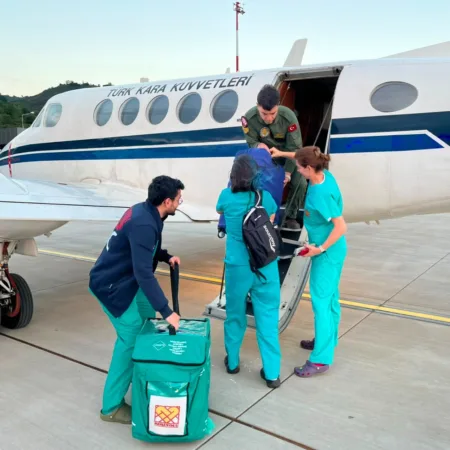

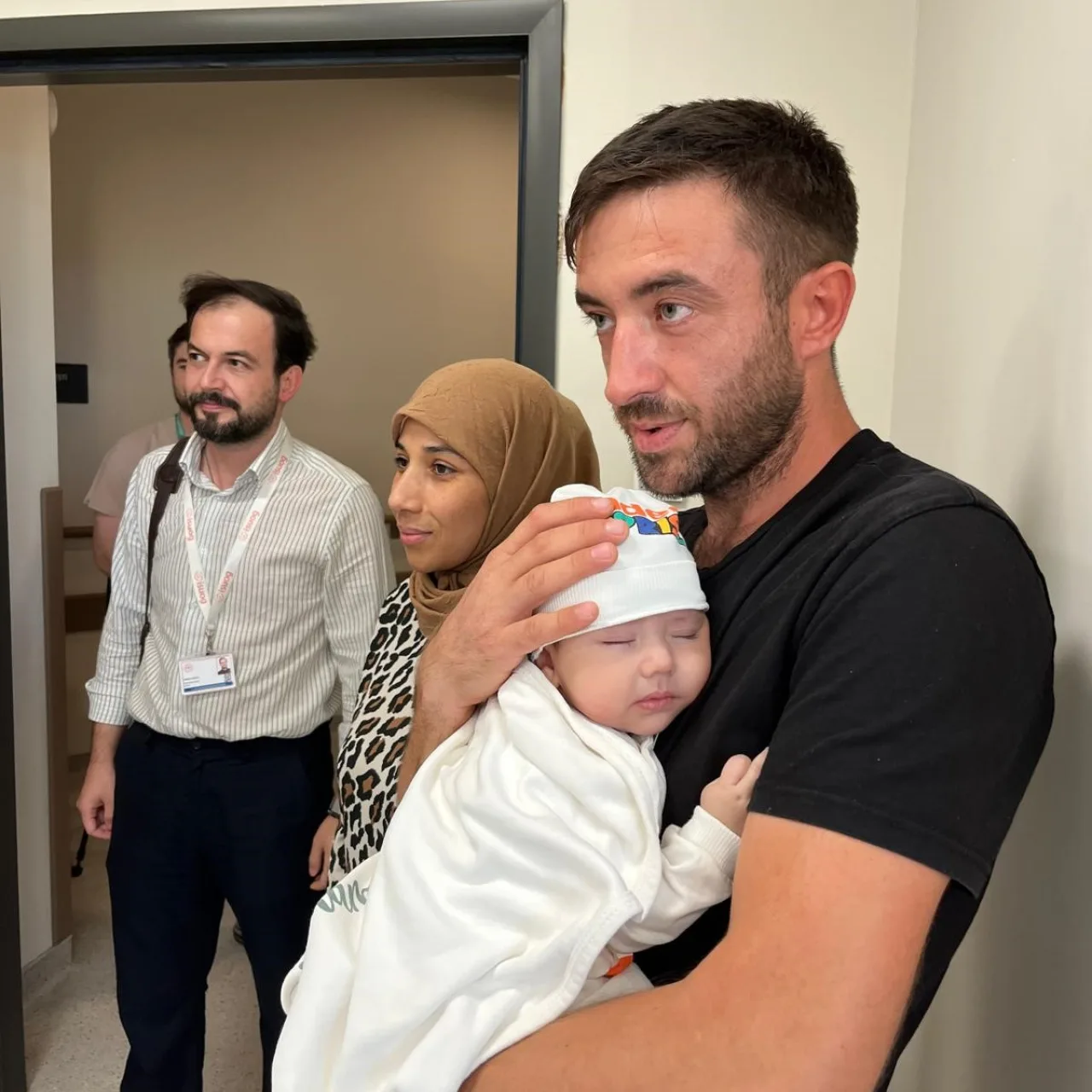
Doctors in Türkiye successfully performed a rare fetal thoracoamniotic shunt procedure on an unborn baby diagnosed with a congenital lung malformation, allowing the pregnancy to continue safely until delivery.
A multidisciplinary team at Bursa City Hospital successfully treated a fetus diagnosed with Congenital Pulmonary Airway Malformation (CPAM) using a minimally invasive fetal thoracoamniotic shunt. The procedure relieved pressure caused by a rapidly enlarging lung cystic lesion, enabling the pregnancy to progress before the baby underwent further treatment after birth.
Doctors at Bursa City Hospital in Türkiye successfully performed a rare fetal thoracoamniotic shunt procedure on an unborn baby diagnosed with Congenital Pulmonary Airway Malformation (CPAM), a rare developmental lung disorder that can become life-threatening before birth if severe complications develop.
The abnormality was detected during a routine ultrasound examination at the 22nd week of pregnancy, when physicians identified a rapidly enlarging cystic lesion in the fetus’s lung. The medical team closely monitored the pregnancy before deciding to intervene when the lesion continued to expand and increased the risk of complications.
At approximately 30 weeks’ gestation, specialists performed a minimally invasive fetal thoracoamniotic shunt procedure under ultrasound guidance. The shunt was placed to drain fluid from the cystic lesion into the amniotic cavity, reducing pressure on the developing lungs and surrounding organs while allowing fetal development to continue.
The baby was later delivered safely and underwent additional postnatal surgery by pediatric surgeons to complete treatment of the congenital lung abnormality. Hospital officials reported that the infant recovered well following the combined prenatal and postnatal interventions.
Congenital Pulmonary Airway Malformation is a rare congenital disorder affecting fetal lung development. Most cases are monitored throughout pregnancy without intervention. However, when the lesion grows rapidly or causes complications such as fetal hydrops or compression of the heart and lungs, fetal treatment may be considered at highly specialized centers.
Experts emphasize that fetal thoracoamniotic shunting is reserved for carefully selected high-risk pregnancies and should be performed only by experienced multidisciplinary fetal medicine teams. The procedure is designed to reduce life-threatening complications before birth rather than cure the underlying condition.
Why It Matters
Advances in fetal medicine are enabling physicians to treat selected congenital disorders before birth, improving survival and reducing complications in high-risk pregnancies. Although fetal thoracoamniotic shunting is performed only in rare and carefully selected cases, successful outcomes demonstrate the growing role of minimally invasive prenatal interventions in modern perinatal care.
Frequently Asked Questions
What is Congenital Pulmonary Airway Malformation (CPAM)?
CPAM is a rare congenital abnormality in which part of the fetal lung develops abnormal cystic tissue. Most cases are monitored during pregnancy, while severe cases may require prenatal or postnatal intervention.
What is a fetal thoracoamniotic shunt?
A fetal thoracoamniotic shunt is a minimally invasive device inserted under ultrasound guidance to drain fluid from a fetal lung cyst into the amniotic cavity, relieving pressure on the developing lungs and surrounding organs.
Why wasn’t surgery performed immediately after diagnosis?
The lung lesion was detected at 22 weeks, but physicians monitored its progression before deciding that prenatal intervention was necessary. The shunt procedure was performed later, at approximately 30 weeks’ gestation, when the risk of complications had increased.
Is fetal surgery commonly performed for CPAM?
No. Most CPAM cases do not require prenatal intervention. Fetal procedures are generally reserved for severe cases with rapidly enlarging lesions or life-threatening complications.
Sources: Bursa City Hospital, İhlas News Agency (İHA), Children’s Hospital of Philadelphia (CHOP), International Society of Ultrasound in Obstetrics and Gynecology (ISUOG)