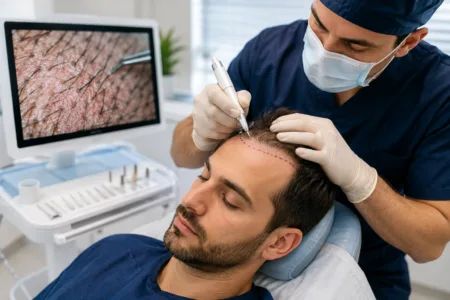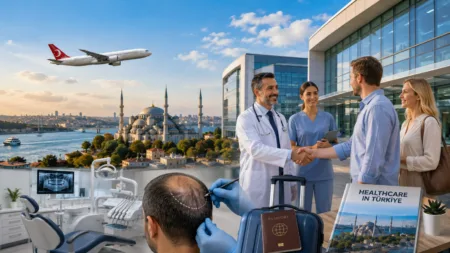
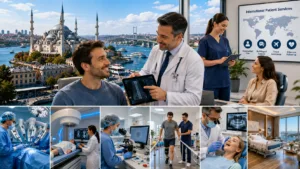



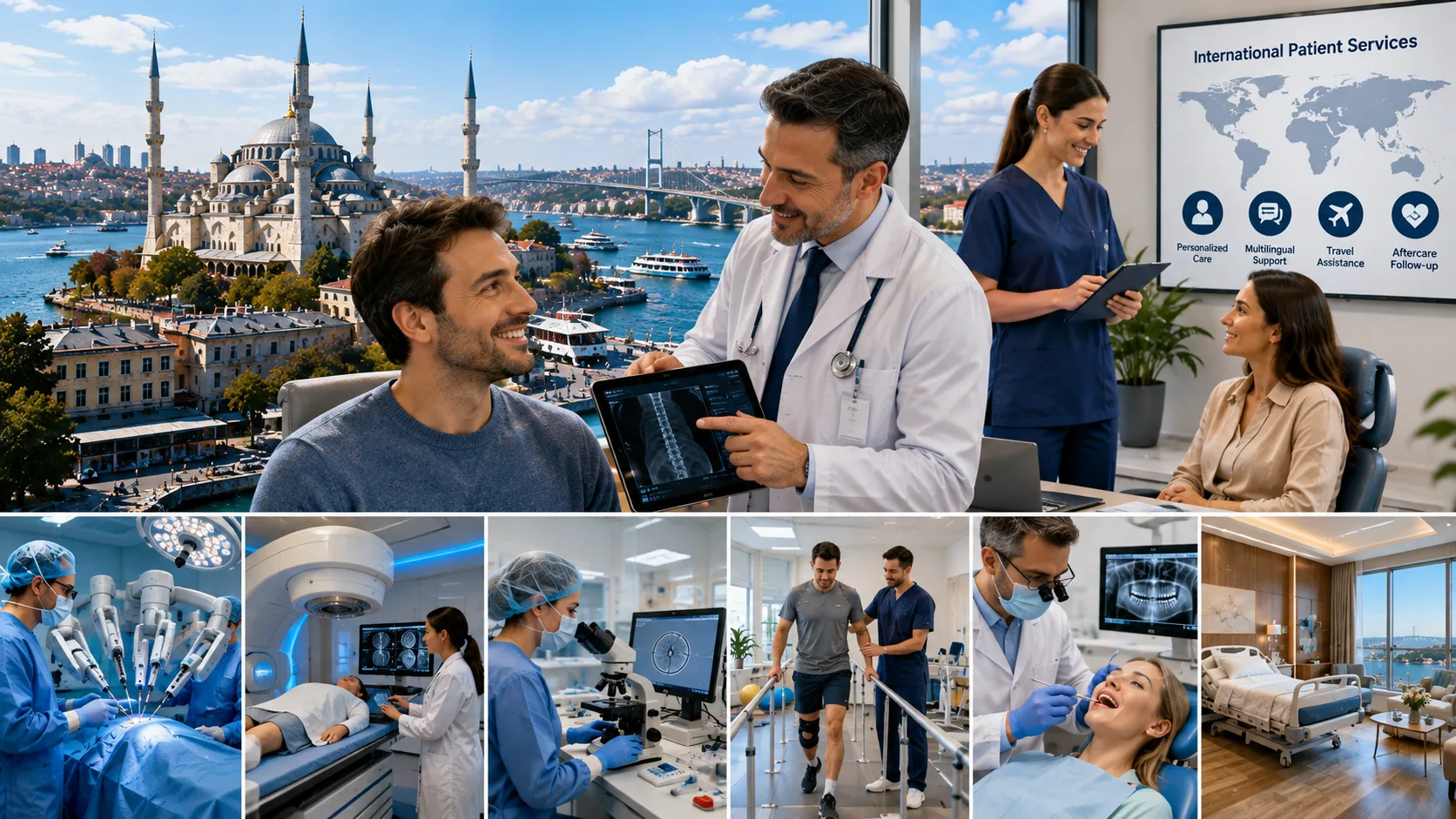
Hair transplantation remains one of Türkiye’s best-known medical tourism services, but hospitals are increasingly promoting a broader portfolio of treatments, including oncology, orthopedics, fertility care, advanced dentistry, and robotic-assisted surgery, as they seek to attract international patients.
Türkiye’s medical tourism industry is expanding beyond its global reputation for hair transplantation. While cosmetic procedures continue to attract international patients, healthcare providers are increasingly investing in specialized medical services, advanced technologies, and multidisciplinary care. Official data also indicate continued growth in international patient numbers and medical tourism revenue, although specialty-specific patient statistics are not publicly available.
Hair transplantation continues to be one of the most recognizable components of Türkiye’s medical tourism industry. However, hospitals and healthcare providers are increasingly highlighting a wider range of medical specialties as they compete for international patients in a rapidly evolving global healthcare market.
According to International Health Services Inc. (USHAŞ), an affiliate of Türkiye’s Ministry of Health, 302,487 international patients received healthcare services in Türkiye during the first quarter of 2026, generating approximately US$761.5 million in medical tourism revenue.
Although official statistics do not provide a breakdown by medical specialty, many healthcare providers have expanded services aimed at international patients, reflecting broader efforts to diversify treatment offerings beyond traditional cosmetic procedures.
Expanding treatment portfolio
In addition to hair restoration, cosmetic surgery and dental care, hospitals increasingly promote services in oncology, orthopedics, cardiovascular medicine, fertility treatment, ophthalmology, bariatric surgery, organ transplantation, rehabilitation, and minimally invasive surgical procedures.
The expansion reflects investments in specialized medical teams, advanced diagnostic technologies, and multidisciplinary treatment programs designed to serve patients with a wide range of healthcare needs.
Technology plays a growing role
Healthcare providers across Türkiye have continued investing in technologies such as robotic-assisted surgery, digital imaging, precision diagnostics, and advanced radiotherapy systems.
These technologies are used across multiple medical specialties and may improve surgical precision or treatment planning for appropriately selected patients. Their availability has also become an important element of hospitals’ international marketing strategies.
Quality and accreditation gain prominence
Industry observers note that international patients increasingly consider hospital accreditation, physician expertise, treatment outcomes, multilingual services, and post-treatment support alongside treatment costs when choosing a destination for care.
Many hospitals have expanded international patient departments, digital consultation services, and multilingual care coordination as part of broader efforts to improve the patient experience before, during, and after treatment.
From procedures to comprehensive care
Healthcare providers are increasingly positioning Türkiye as a destination for comprehensive treatment rather than individual procedures.
Integrated care models that combine diagnosis, treatment, rehabilitation, accommodation support, interpretation services, and follow-up care have become more common, particularly among hospitals serving international patients.
Although official data do not quantify demand by specialty, the broader range of services promoted by providers illustrates the sector’s efforts to attract patients seeking more complex medical care.
Looking ahead
Türkiye continues to benefit from its strategic location, modern hospital infrastructure, experienced healthcare professionals, and competitive treatment costs compared with many higher-income countries.
As international competition intensifies, industry analysts suggest that sustained growth is likely to depend increasingly on clinical quality, patient safety, transparency, internationally recognized accreditation, and continuity of care in addition to affordability.
Why It Matters
Medical tourism is an important contributor to Türkiye’s service exports and healthcare economy. As providers broaden their clinical offerings beyond well-established cosmetic procedures, diversification could strengthen the sector’s resilience, expand its international patient base, and support higher-value healthcare services over the long term. While official statistics confirm continued growth in patient numbers and revenue, the commercial success of individual specialties will depend on future market demand and published data.
Frequently Asked Questions
Is hair transplantation still important for Türkiye’s medical tourism industry?
Yes. Hair transplantation remains one of the country’s most internationally recognized medical tourism services, although many healthcare providers are expanding their portfolios to include a wider range of medical specialties.
Which treatments are hospitals increasingly promoting?
Hospitals commonly market oncology, orthopedics, fertility treatment, cardiovascular care, ophthalmology, advanced dentistry, bariatric surgery, rehabilitation, and minimally invasive surgical procedures alongside cosmetic treatments.
Do official statistics show which specialties attract the most international patients?
No. USHAŞ publishes overall international patient numbers and revenue, but it does not currently release specialty-specific patient volumes.
What factors may influence Türkiye’s future competitiveness?
Industry observers point to clinical quality, accreditation, patient safety, transparent communication, digital health services, and comprehensive follow-up care as increasingly important factors alongside competitive pricing.
Source: International Health Services Inc. (USHAŞ), Ministry of Health of Türkiye