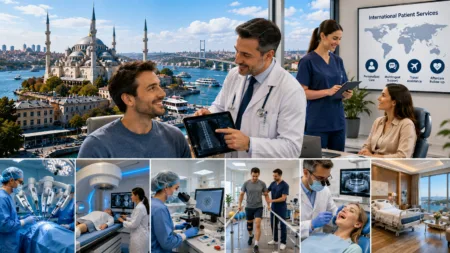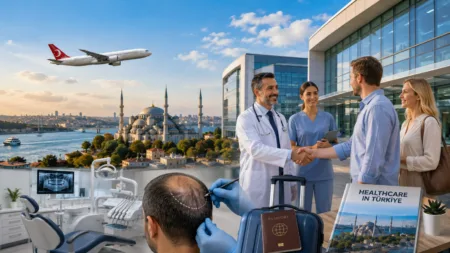



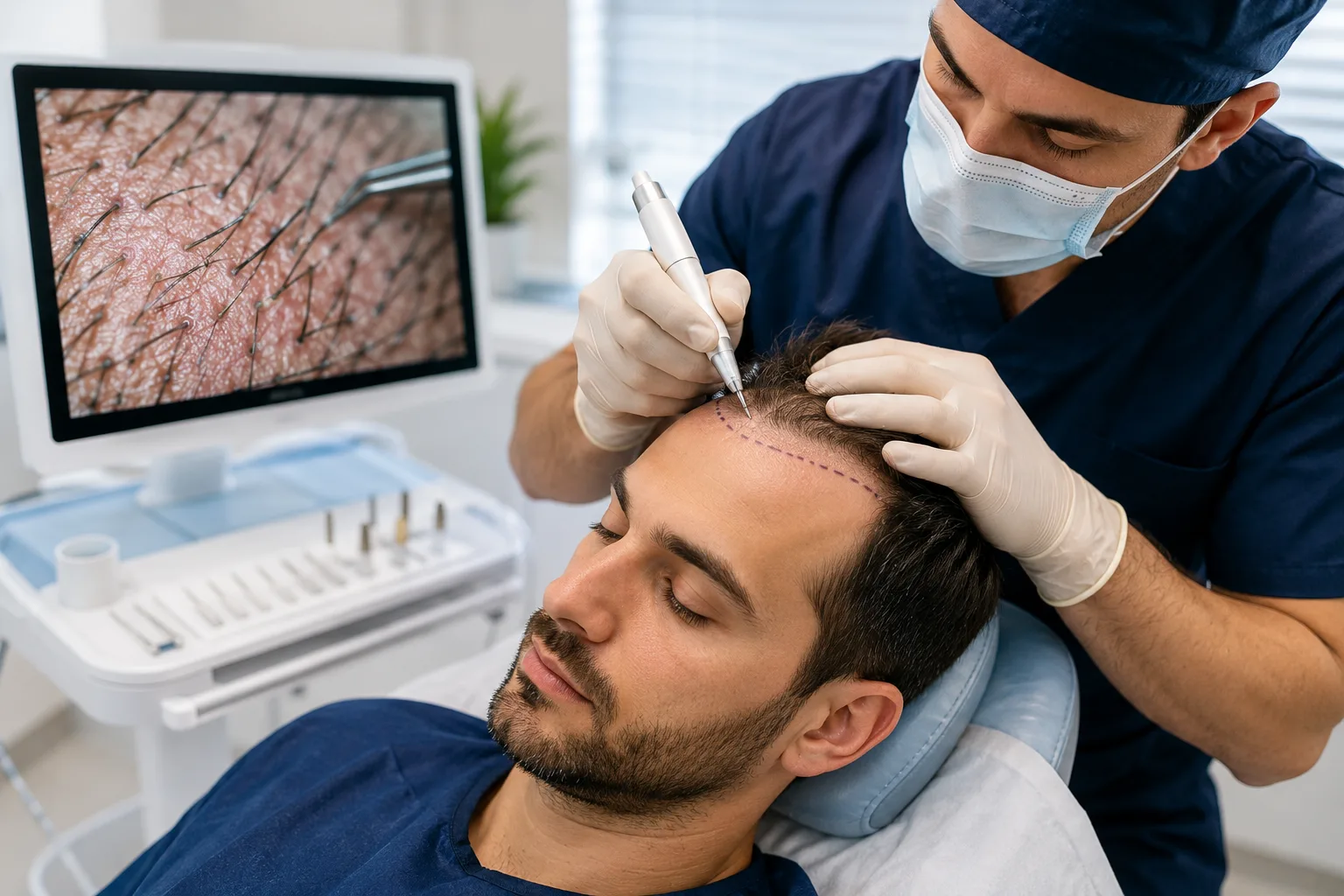
Hospitals across Türkiye are investing in advanced medical technologies to support complex treatments, expand clinical capabilities, and enhance care for international patients. While technology has become an increasingly important competitive advantage, healthcare experts emphasize that successful outcomes ultimately depend on physician expertise, patient safety, and internationally recognized quality standards.
Advanced medical technologies are becoming an integral part of Türkiye’s healthcare landscape. Robotic-assisted surgery, hybrid operating rooms, precision imaging, modern radiotherapy, digital pathology, telemedicine, and AI-supported clinical tools are available in many leading hospitals. Together with experienced medical teams and internationally accredited healthcare facilities, these technologies reinforce Türkiye’s position as a major destination for medical tourism.
Türkiye has continued investing in advanced healthcare technologies as hospitals expand their capacity to deliver increasingly complex medical care for both domestic and international patients.
According to the Ministry of Health and International Health Services Inc. (USHAŞ), the country continues to strengthen its international healthcare services through modern hospitals, specialized treatment centers, and healthcare institutions authorized to treat international patients. Although official statistics do not identify individual technologies as primary drivers of medical tourism, many hospitals highlight their technological capabilities as part of their international patient services.
Robotic-assisted surgery
Robotic-assisted surgical systems are available in many of Türkiye’s leading public, university, and private hospitals.
These platforms are used in selected procedures across specialties including urology, gynecology, general surgery, thoracic surgery, and colorectal surgery. For appropriately selected patients, robotic systems can enhance visualization, dexterity, and surgical precision. However, physicians emphasize that treatment decisions are based on each patient’s clinical condition rather than technology alone.
Advanced diagnostic imaging
Many tertiary-care hospitals operate high-resolution MRI, multi-detector CT, PET/CT, digital mammography, and advanced ultrasound systems.
These technologies support earlier diagnosis, detailed treatment planning, and disease monitoring across specialties such as oncology, cardiology, neurology, and orthopedics.
Precision cancer care
Comprehensive cancer centers throughout Türkiye provide advanced radiotherapy techniques, including intensity-modulated radiotherapy (IMRT), image-guided radiotherapy (IGRT), stereotactic radiosurgery (SRS), and stereotactic body radiotherapy (SBRT).
Combined with multidisciplinary oncology teams, these technologies enable personalized treatment planning based on each patient’s diagnosis and clinical needs.
Hybrid operating rooms
Hybrid operating rooms combine conventional surgical facilities with advanced imaging technologies, allowing surgeons to perform minimally invasive and open procedures within the same operating environment.
These facilities are increasingly available in major tertiary hospitals, particularly in cardiovascular medicine, vascular surgery, neurosurgery, and interventional specialties.
Artificial intelligence supports clinical practice
An increasing number of hospitals are introducing artificial intelligence-supported applications in selected clinical and administrative workflows.
Current applications include medical imaging analysis, pathology support, appointment management, clinical documentation, workflow optimization, and decision-support systems. Healthcare professionals stress that AI serves as a support tool and does not replace physician judgment.
Digital pathology and precision diagnostics
Specialized institutions, particularly university hospitals and comprehensive cancer centers, are expanding the use of digital pathology, molecular diagnostics, and genomic testing.
These technologies support personalized treatment planning, especially in oncology and selected rare diseases, although their availability varies among healthcare institutions.
Digital services for international patients
Hospitals serving international patients increasingly provide multilingual patient coordinators, telemedicine consultations, electronic medical records, secure digital communication platforms, online appointment scheduling, and remote follow-up after treatment.
These services improve continuity of care and facilitate communication before patients travel to Türkiye and after they return home.
Technology complements clinical expertise
Healthcare professionals consistently emphasize that advanced technology is only one component of high-quality healthcare.
Successful outcomes depend on experienced physicians, multidisciplinary collaboration, evidence-based medicine, appropriate patient selection, strong quality management systems, patient safety, and comprehensive postoperative care, alongside access to modern medical equipment.
Why It Matters
Investment in advanced hospital technologies is helping strengthen Türkiye’s international healthcare profile and supports the country’s ability to deliver increasingly complex medical services. However, sustainable growth in medical tourism will continue to depend on combining technological innovation with clinical excellence, internationally recognized quality standards, transparent patient communication, and a strong commitment to patient safety.
Frequently Asked Questions
Which advanced technologies are available in Türkiye’s leading hospitals?
Many major hospitals offer robotic-assisted surgery, advanced MRI and CT imaging, PET/CT, hybrid operating rooms, modern radiotherapy systems, digital pathology, telemedicine, and AI-supported clinical tools.
Does advanced technology guarantee better treatment outcomes?
No. Technology can improve diagnosis, treatment planning, and surgical precision, but outcomes also depend on physician expertise, patient characteristics, evidence-based care, and hospital quality standards.
Is artificial intelligence widely used in Turkish hospitals?
An increasing number of hospitals are introducing AI-supported applications in selected clinical and operational areas, although implementation varies by institution and medical specialty.
Why is hospital technology important for international patients?
Modern technologies can expand treatment options and support complex care, but international patients also consider physician experience, accreditation, patient safety, communication, transparency, and continuity of care when selecting a healthcare provider.
Source: Ministry of Health of Türkiye, International Health Services Inc. (USHAŞ), World Health Organization (WHO), Organisation for Economic Co-operation and Development (OECD)