




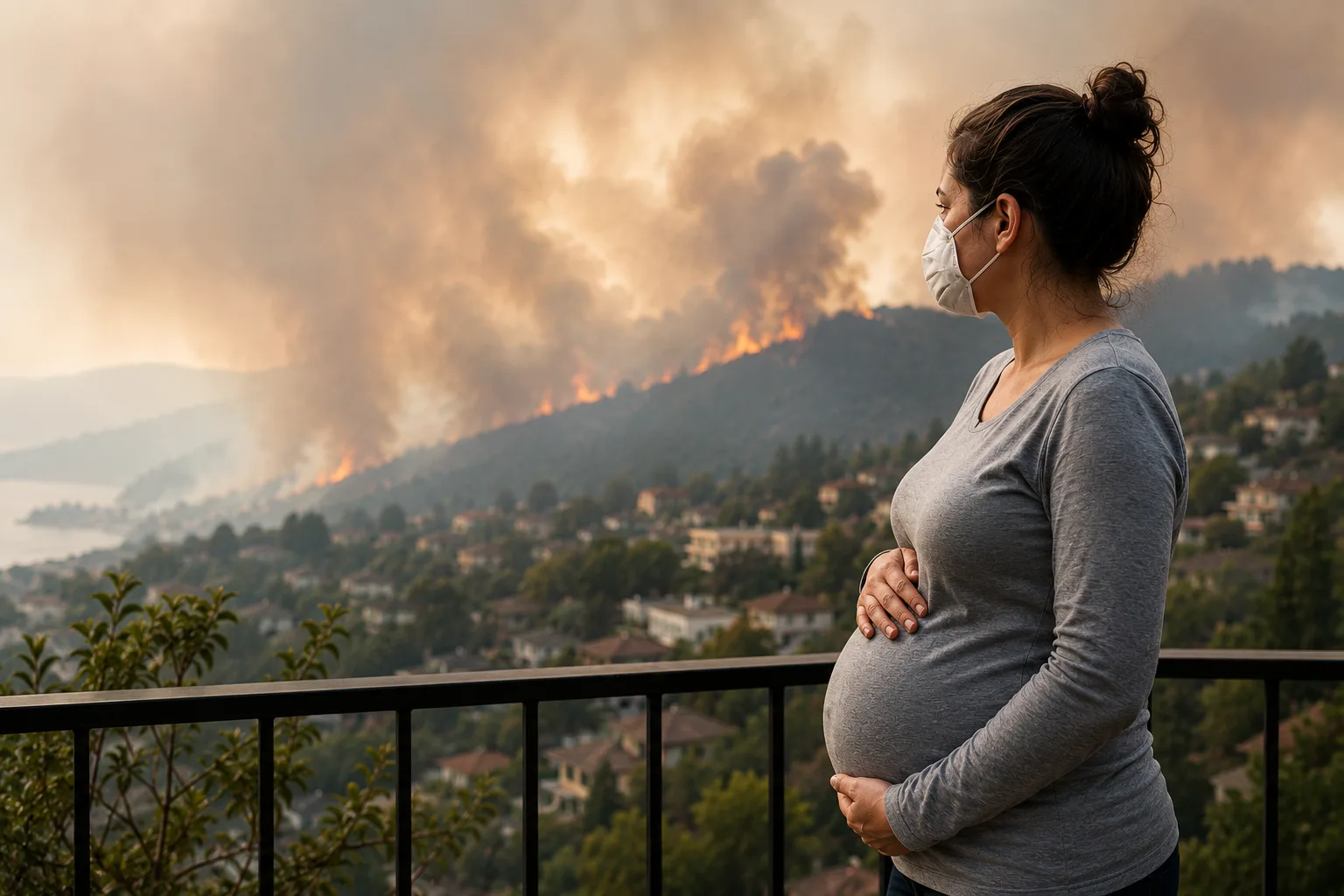
A U.S. study of 64.5 million births found that while overall PM2.5 exposure during pregnancy declined, the share linked to wildfire smoke more than doubled.
A study of 64.5 million U.S. births found that wildfire smoke accounts for a growing share of fine particulate matter exposure during pregnancy. While overall PM2.5 exposure fell between 2003 and 2019, the wildfire-attributable share rose from 3.71% to 8.19%. The findings suggest wildfire smoke is eroding some of the air-quality gains achieved by reducing pollution from other sources.
Wildfire smoke is accounting for a growing share of fine particulate matter exposure during pregnancy in the United States, even as overall air pollution levels decline, according to a study of 64.5 million live births.
The peer-reviewed research, published in Frontiers in Environmental Health on August 7, 2026, analyzed birth records from 2003 through 2019 alongside daily air pollution estimates across 2,842 counties in the contiguous United States.
Researchers found that exposure to fine particulate matter, or PM2.5, from non-fire sources declined substantially over the study period. Pollution associated with fires, however, did not fall at the same rate.
As a result, wildfire smoke represented an increasingly important component of PM2.5 exposure during pregnancy.
Average total PM2.5 exposure during pregnancy declined from 12.82 micrograms per cubic meter in 2003–2005 to 8.45 micrograms per cubic meter in 2017–2019.
That represents a 34.1% decline.
Non-fire PM2.5 exposure fell by 37.2% over the same period.
By contrast, the share of total prenatal PM2.5 exposure attributed to fires increased from 3.71% to 8.19%, meaning its relative contribution more than doubled.
Researchers estimated that fire-related pollution offset approximately 0.22 micrograms per cubic meter of the improvement in PM2.5 exposure that would otherwise have occurred nationwide.
Fires dominate remaining high-exposure events
The researchers also examined days when daily PM2.5 concentrations exceeded 35 micrograms per cubic meter.
High-exposure events associated with non-fire pollution declined by 85% during the study period.
The proportion of births affected by high PM2.5 exposure associated with fires, however, remained at approximately 14% to 15%.
By the end of the study period, fires accounted for 65% of the remaining high-PM2.5 exposure events.
The findings suggest that as pollution from transportation, industry and other conventional sources declines, fires are becoming increasingly important drivers of severe particulate pollution episodes.
Study analyzed 64.5 million births
Researchers analyzed approximately 64.5 million live births recorded between 2003 and 2019.
Birth records were linked to daily PM2.5 estimates based on the county where the mother lived at the time of delivery, allowing researchers to estimate average pollution exposure throughout pregnancy.
The study used the U.S. Environmental Protection Agency’s Community Multiscale Air Quality modeling system to distinguish PM2.5 associated with fires from pollution generated by other sources.
The model’s fire category included wildfires as well as smaller biomass-burning sources such as prescribed and agricultural burns. The researchers said wildfires were the dominant contributor to the long-term increase and referred to the exposure throughout the study as wildfire-attributable PM2.5.
Unequal exposure across communities
Wildfire-related PM2.5 exposure during pregnancy was not distributed equally across the United States.
The study identified disproportionate exposure burdens among lower-income, rural and American Indian/Alaska Native communities.
Higher wildfire-related pollution exposure was also observed in communities near areas where development meets or intermingles with wildland vegetation.
In counties with inadequate access to obstetric care, the contribution of wildfire pollution to PM2.5 exposure was approximately twice that of counties with adequate maternity care access during 2017–2019.
The findings highlight how environmental exposure and disparities in access to healthcare can overlap in some communities.
Study did not measure pregnancy complications
An important distinction is that the study examined pollution exposure rather than directly measuring pregnancy outcomes.
Researchers did not calculate whether wildfire smoke increased the risk of preterm birth, low birth weight or other pregnancy complications among the 64.5 million births included in the analysis.
Instead, the study examined how wildfire-attributable PM2.5 exposure during pregnancy changed over time and how that exposure was distributed across different U.S. communities.
Previous research has linked wildfire smoke exposure during pregnancy with adverse outcomes including preterm birth and low birth weight.
The new study, however, does not establish how much wildfire smoke increases the risk of any particular pregnancy complication.
Climate change and wildfire activity
The researchers noted that increasing wildfire activity in North America has been associated with several factors, including hotter and drier conditions, historical land-management practices and expanding development in areas where human communities meet wildland vegetation.
Climate change is widely recognized as an important contributor to conditions that can increase wildfire risk, including higher temperatures and greater aridity.
However, this study did not quantify how much of the observed change in wildfire-related PM2.5 exposure was directly attributable to climate change.
Its central finding is instead that wildfire smoke has become a substantially larger contributor to air pollution exposure during pregnancy.
Air-quality gains being eroded
Reductions in emissions from transportation, industry and other human sources have contributed to significant improvements in U.S. air quality.
The study suggests wildfire smoke is now eroding part of those gains.
If wildfire activity continues to increase, researchers said smoke pollution could increasingly offset progress achieved through reductions in conventional emissions.
The findings point to the growing importance of incorporating wildfire smoke into air-quality and maternal health planning rather than relying solely on strategies targeting traditional pollution sources.
Why It Matters
Wildfire smoke’s growing contribution to air pollution exposure during pregnancy has implications for both maternal health and environmental policy. Although this study did not directly measure pregnancy complications, its analysis of 64.5 million births shows that wildfire-attributable PM2.5 is becoming a more prominent exposure source. The findings suggest wildfire smoke will require greater consideration in efforts to protect pregnant populations as conventional air pollution declines.
Frequently Asked Questions
Is wildfire smoke dangerous during pregnancy?
Exposure to PM2.5 and other forms of air pollution during pregnancy is a health concern, and previous studies have associated wildfire smoke with adverse birth outcomes. This study, however, measured changes in exposure rather than directly estimating the risk of pregnancy complications.
How much did wildfire smoke’s contribution to pregnancy exposure increase?
The wildfire-attributable share of total PM2.5 exposure during pregnancy increased from 3.71% to 8.19% over the study period. Its relative contribution therefore more than doubled.
How many births were included in the study?
Researchers analyzed approximately 64.5 million live births between 2003 and 2019. The birth records were linked with air pollution estimates across 2,842 counties in the contiguous United States.
How can pregnant people reduce exposure to wildfire smoke?
During heavy smoke events, pregnant people should follow official air-quality alerts and public health guidance aimed at reducing exposure. Individual precautions may depend on health status and local conditions, so patients with specific concerns should consult their healthcare professional.
Source: Frontiers in Environmental Health
This content has been prepared solely for news and general information purposes. The information provided herein is not intended for diagnosis or treatment. Please consult your doctor or a qualified healthcare provider regarding decisions concerning your health. Our website is not liable for any direct or indirect consequences arising from the use of the published information.