




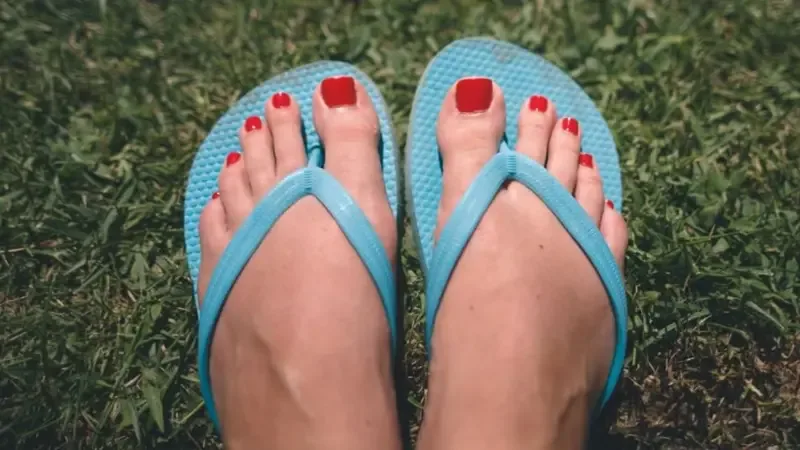
Flip-flops are generally suitable for short-term use, such as at the beach or around a pool, but they may not provide enough support for long walks or prolonged standing. Because many designs lack adequate arch and heel support, wearers may unconsciously grip the sandals with their toes while walking. Over time, this can contribute to foot pain, blisters and strain in the feet and lower legs.
Why can flip-flops cause foot problems?
Flip-flops are popular during hot weather because they are lightweight and allow air to circulate around the feet. However, many traditional designs offer little support for the arch and heel.
The lack of structure can change the way a person walks. Because the sandal is not secured around the heel, the toes may repeatedly grip the sole to keep it in place. Repeatedly doing this over long periods can place additional stress on the muscles and tendons of the foot.
They may not be suitable for long walks
Flip-flops can be practical for short periods, particularly at beaches, swimming pools or around the home. However, they are generally not the best choice for long-distance walking, prolonged standing or exercise.
Insufficient cushioning and support may contribute to foot discomfort, heel pain, blisters and strain around the ankle. People with existing foot problems may be particularly sensitive to poorly supportive footwear.
What should you look for in summer footwear?
For longer periods of walking, footwear should fit properly and provide adequate cushioning and support for the foot.
People who prefer open footwear should consider models that offer better arch and sole support and provide greater stability while walking. Flip-flops are better reserved for activities where extensive walking is not required.
Persistent foot pain, swelling or difficulty walking should be evaluated by a healthcare professional.
Why It Matters
Although flip-flops can be comfortable and practical in hot weather, their minimal structure makes them unsuitable for every activity. Choosing footwear according to the duration and intensity of use can help protect foot health, particularly during long walks, travel and extended periods of standing.
Frequently Asked Questions
Are flip-flops harmful to your feet?
Not necessarily. Short-term use is generally not a problem for most healthy people, but prolonged use may increase foot strain because many flip-flops provide limited support.
Can you walk long distances in flip-flops?
They are generally not recommended for long walks because they often lack adequate arch support, cushioning and heel stability.
Can flip-flops cause heel pain?
Prolonged use of poorly supportive footwear may contribute to heel or sole pain in some people. Persistent or severe pain should be assessed by a healthcare professional.
What footwear is best for hot weather?
Comfortable footwear that fits properly and provides adequate cushioning, stability and support is generally preferable for extended walking, even in hot weather.
Sources: American Academy of Orthopaedic Surgeons, American College of Foot and Ankle Surgeons, Mayo Clinic
This content has been prepared solely for news and general information purposes. The information provided herein is not intended for diagnosis or treatment. Please consult your doctor or a qualified healthcare provider regarding decisions concerning your health. Our website is not liable for any direct or indirect consequences arising from the use of the published information.