




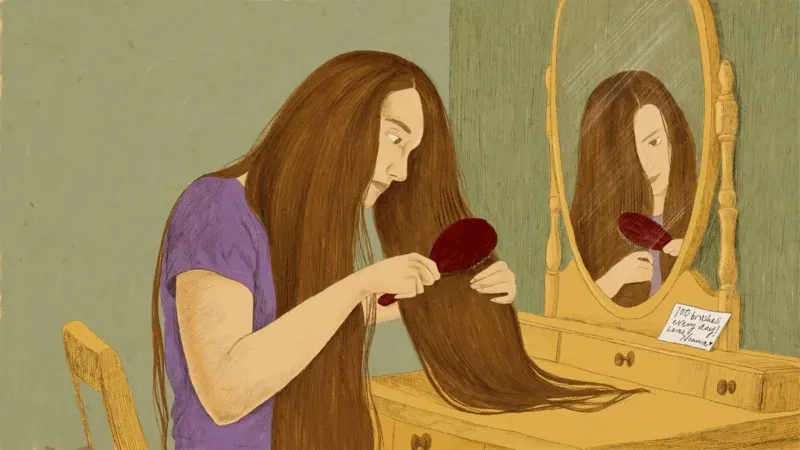
How often you should brush your hair depends largely on its texture, length, condition and tendency to tangle. There is no scientific reason to brush hair 100 times a day, and excessive brushing may cause mechanical damage. Dermatology guidance recommends brushing only as much as needed for styling and detangling, using gentle techniques and adapting the routine to whether hair is straight, curly, tightly textured, dry or wet.
The 100-brush-stroke myth
For generations, people have been told that brushing their hair 100 times a day could make it shinier, healthier and stronger.
The idea has been linked to historical beauty rituals and stories about figures such as Empress Elisabeth of Austria, known as Sisi, whose exceptionally long hair became part of her public image.
But modern dermatology advice does not support the idea that repeated brushing improves hair health. The American Academy of Dermatology specifically describes the “100 strokes a day” rule as a myth and advises people to brush or comb only as much as necessary for styling and detangling. Excessive brushing can contribute to split ends and mechanical damage.
How often should you brush?
There is no universal number.
The right frequency depends on several factors, including:
- Hair texture and curl pattern
- Hair length
- Whether the hair tangles easily
- Whether it is chemically treated or damaged
- Whether it is wet or dry
- The type of brush or comb being used
A study examining everyday combing habits found that participants reported an average brushing or combing frequency of around 1.7 times per day, although individual routines varied considerably. The study was not designed to establish an ideal brushing frequency, but it illustrates that routine hair care generally involves far fewer than 100 strokes a day.
For most people, the practical approach is simple: brush when your hair needs detangling or styling, rather than following a fixed number of strokes.
Wet hair needs special care
Wet hair can be more vulnerable to breakage during brushing or combing.
The American Academy of Dermatology recommends that most people handle wet hair as little as possible because it can break more easily when combed or brushed. However, people with tightly curled or textured hair may benefit from detangling while the hair is wet to reduce breakage.
This means there is no single rule about whether hair should always be brushed wet or dry.
For straighter hair, gentle brushing when dry may be preferable. For tightly curled or coily hair, detangling while wet and using conditioner may help reduce resistance and mechanical stress.
Start at the ends
Technique may matter more than frequency.
Pulling a brush forcefully from the roots through a large knot can place unnecessary tension on the hair shaft and scalp.
Dermatology guidance recommends removing tangles gently and using a wide-tooth comb when appropriate. Working gradually through knots, rather than pulling aggressively, can help reduce breakage.
People with long, fine, bleached or otherwise damaged hair may need to be particularly careful, as chemically treated hair can be more vulnerable to mechanical stress. A study of combing forces also found that wet, bleached hair was especially susceptible to significant loading during combing, while conditioner reduced that effect.
Can too much brushing damage your hair?
Yes.
Improper or excessive brushing can contribute to damage to the hair shaft. A dermatology review notes that inappropriate use of hairbrushes can be associated with problems including hair-shaft damage and traction-related hair loss.
A case report published in JAMA Dermatology also described a form of acquired diffuse hair-shaft damage associated with prolonged use of a detangling hairbrush, highlighting the potential consequences of repeated mechanical stress in extreme circumstances.
This does not mean that normal, gentle brushing causes hair loss. Instead, the evidence suggests that force, frequency, hair condition and technique all matter.
Does brushing make hair grow faster?
There is no evidence that brushing alone makes hair grow faster.
Brushing may remove loose hairs and help manage tangles, but it does not change the biological growth rate of healthy hair follicles.
It is also important not to confuse normal shedding with hair loss caused by brushing. People naturally shed hairs as part of the hair-growth cycle, and brushing can make those already-shed hairs more visible.
If hair loss is sudden, persistent or accompanied by scalp symptoms, a dermatologist can help identify the underlying cause.
How to brush your hair more safely
For healthier-looking hair, dermatology guidance supports a few simple principles:
- Brush only as much as necessary.
- Avoid the “100 strokes a day” rule.
- Detangle gently rather than pulling through knots.
- Consider a wide-tooth comb for tangles.
- Take extra care with wet, bleached or damaged hair.
- Use conditioner or another appropriate detangling product when needed.
- Avoid repeatedly pulling or tugging on the hair.
The best brushing routine is therefore not the longest one. It is the one that keeps hair manageable while minimizing unnecessary mechanical stress.
Why It Matters
How often you brush your hair may seem like a minor part of a beauty routine, but repeated mechanical stress can contribute to breakage, split ends and, in some circumstances, more significant hair damage. The persistence of the “100 strokes” myth also illustrates how traditional beauty advice can survive long after scientific guidance has changed. A personalized, gentle approach may be more useful than following a fixed daily target.
Frequently Asked Questions
Should I brush my hair every day?
There is no universal requirement to brush hair a specific number of times each day. Most people can brush or comb when needed for detangling and styling, using a gentle technique.
Is brushing hair 100 times a day good for it?
No. The American Academy of Dermatology describes the idea as a myth. Excessive brushing can contribute to split ends and hair damage.
Is it better to brush wet or dry hair?
It depends on hair type. Most people should minimize brushing when hair is wet because wet strands can break more easily, while tightly curled or textured hair may be better detangled when wet.
Can brushing cause hair loss?
Normal, gentle brushing does not generally cause pathological hair loss, but aggressive or repeated pulling can damage hair and may contribute to traction-related problems. Persistent or unexplained hair loss should be assessed by a healthcare professional.
Sources: American Academy of Dermatology, PubMed, International Journal of Cosmetic Science, JAMA Dermatology
This content has been prepared solely for news and general information purposes. The information provided herein is not intended for diagnosis or treatment. Please consult your doctor or a qualified healthcare provider regarding decisions concerning your health. Our website is not liable for any direct or indirect consequences arising from the use of the published information.