




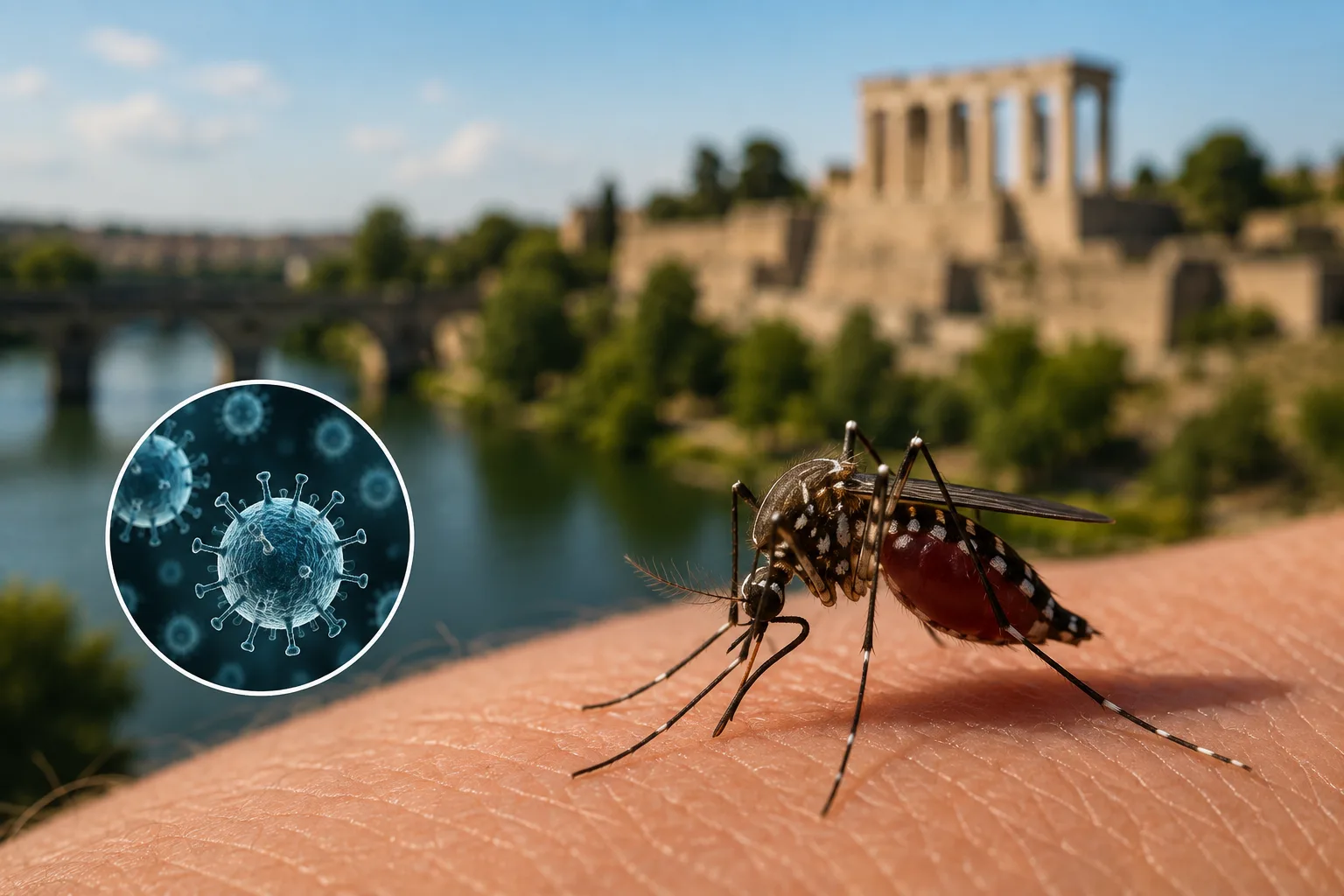
Greece reported 45 new West Nile virus cases in one week, while Türkiye has recorded infections in previous years. There is no specific antiviral treatment or approved human vaccine.
Greece has reported a sharp increase in West Nile virus infections, with 110 locally acquired cases recorded as of August 12, 2026, including 45 reported in the latest week. Türkiye has also recorded West Nile virus infections in previous years, including locally acquired cases. No specific antiviral treatment or approved human vaccine is available, making surveillance, supportive care and mosquito-control measures central to disease management.
Greece has reported 45 new West Nile virus infections in a single week as mosquito-borne transmission intensifies during the summer season.
According to the Greek National Public Health Organization (EODY), 110 locally acquired human cases had been recorded in Greece as of August 12, 2026. Nine deaths were also reported.
The latest increase has drawn attention to the situation in neighboring Türkiye, where West Nile virus is not a new infectious disease and human cases have been documented in previous years.
Is West Nile virus present in Türkiye?
Türkiye has previously recorded confirmed West Nile virus infections.
The Turkish Ministry of Health states in its West Nile Virus Infection Case Management Guideline that human cases have been reported in Türkiye since 2010. The ministry also maintains surveillance, laboratory testing and case-notification procedures for the disease.
European Centre for Disease Prevention and Control (ECDC) data provide additional evidence of domestic transmission.
In 2024, ECDC recorded 90 locally acquired human West Nile virus infections in Türkiye and seven deaths. Affected areas included Edirne, Bursa, Osmaniye, Kırklareli and Tekirdağ, among others.
In 2025, Türkiye reported one locally acquired human infection to European surveillance authorities. The case was associated with Çanakkale.
As of August 17, 2026, however, a current nationwide total for West Nile virus cases in Türkiye for the 2026 transmission season could not be identified in publicly available Ministry of Health data reviewed for this report.
The absence of a publicly identified 2026 national total should therefore not be interpreted as evidence that Türkiye has no cases.
Ministry has issued guidance
Türkiye’s Ministry of Health has an official West Nile Virus Infection Case Management Guideline, which sets out procedures for diagnosis, notification, surveillance, treatment and prevention.
The ministry has also previously issued public information on West Nile virus, describing it as a viral infection primarily transmitted to humans through the bites of infected mosquitoes.
Wild birds act as the principal reservoir in the virus’s natural transmission cycle. Mosquitoes acquire the virus by feeding on infected birds and can subsequently transmit it to humans and some other mammals.
How West Nile virus spreads
West Nile virus is primarily transmitted to people through infected mosquitoes, particularly mosquitoes belonging to the Culex genus.
Humans and horses are generally considered incidental or “dead-end” hosts because the level of virus in their blood is typically insufficient to infect new mosquitoes and sustain the natural transmission cycle.
The infection does not normally spread from person to person through everyday social contact.
Most human infections cause no symptoms. When illness develops, symptoms can include fever, headache, fatigue, muscle aches, nausea, vomiting and skin rash.
A small proportion of infected people can develop severe neurological disease, including meningitis or encephalitis.
Older adults and people with certain underlying health conditions are at greater risk of severe disease.
How is West Nile virus treated?
There is currently no specific antiviral therapy approved for routine treatment of West Nile virus infection.
Treatment therefore focuses on supportive medical care and management of complications.
According to Türkiye’s Ministry of Health case management guidance, patients with severe disease may require management of fluid and electrolyte balance, intravenous fluids when clinically necessary and respiratory support if respiratory failure develops.
Patients with neurological disease may also require monitoring and treatment for seizures, cerebral edema and other complications.
Severe neuroinvasive West Nile disease can require hospitalization and intensive care.
Is this treatment available in Türkiye?
Yes. The supportive and intensive-care measures recommended for severe West Nile virus disease are available within Türkiye’s healthcare system.
However, this should not be interpreted as meaning that Türkiye has a drug that specifically eliminates West Nile virus.
Treatment is directed at supporting the patient while the body responds to the infection and at managing potentially serious complications.
Türkiye’s Ministry of Health guideline establishes the clinical and public-health framework for suspected and confirmed cases, including diagnosis, laboratory procedures, surveillance, notification and disease management.
How is the infection diagnosed?
Symptoms alone are not sufficient to confirm West Nile virus infection.
Diagnosis takes into account the patient’s symptoms, epidemiological history and laboratory findings.
Laboratory testing can include detection of West Nile virus-specific IgM antibodies in serum or cerebrospinal fluid. Confirmatory testing may be necessary because antibodies against related flaviviruses can sometimes cross-react.
Patients with neurological symptoms require particularly careful clinical and laboratory assessment.
Is there a vaccine?
There is currently no approved West Nile virus vaccine for humans.
Prevention therefore relies heavily on reducing exposure to mosquito bites and controlling mosquito populations.
Public-health measures include eliminating standing water where mosquitoes can breed, using window and door screens and taking personal precautions against mosquito bites.
People can also reduce exposure by wearing clothing that covers the skin and using appropriate mosquito repellents, particularly during periods and in locations where mosquito activity is high.
Surveillance remains important
West Nile virus activity can vary considerably from one transmission season to another.
ECDC recorded 1,436 locally acquired human cases across Europe in 2024, including 90 in Türkiye. In 2025, the European total fell to 1,112 locally acquired cases, with one reported in Türkiye.
The sharp rise currently being recorded in Greece therefore reinforces the importance of seasonal surveillance across the region, including Türkiye.
ECDC continues to publish regular West Nile virus surveillance updates during the 2026 transmission season.
Why It Matters
The increase in West Nile virus cases in Greece highlights the continuing regional threat posed by mosquito-borne diseases during the summer transmission season. Türkiye has documented locally acquired infections in previous years, making surveillance and mosquito control particularly relevant. Because there is no specific antiviral treatment or approved human vaccine, prevention, early recognition and supportive treatment of severe cases remain the main tools for reducing the health impact.
Frequently Asked Questions
Are there West Nile virus cases in Türkiye?
Türkiye has recorded locally acquired West Nile virus infections in previous years. ECDC recorded 90 locally acquired cases in Türkiye in 2024 and one in 2025, but a publicly available nationwide total for the 2026 season could not be identified as of August 17.
How is West Nile virus treated?
There is no specific antiviral treatment approved for routine West Nile virus infection. Treatment is supportive, while patients with severe neurological disease may require hospitalization, respiratory support, seizure management or intensive care.
Is West Nile virus treatment available in Türkiye?
Yes. The supportive treatment and intensive-care measures used to manage severe disease are available in Türkiye, and the Ministry of Health has an official case management guideline. This does not mean there is a specific drug that cures West Nile virus infection.
Does Türkiye’s Ministry of Health have guidance on West Nile virus?
Yes. The Ministry of Health has published a West Nile Virus Infection Case Management Guideline covering diagnosis, laboratory testing, treatment, notification, surveillance, vector control and prevention measures.
Source: Greek National Public Health Organization, European Centre for Disease Prevention and Control, Türkiye Ministry of Health
This content has been prepared solely for news and general information purposes. The information provided herein is not intended for diagnosis or treatment. Please consult your doctor or a qualified healthcare provider regarding decisions concerning your health. Our website is not liable for any direct or indirect consequences arising from the use of the published information.